

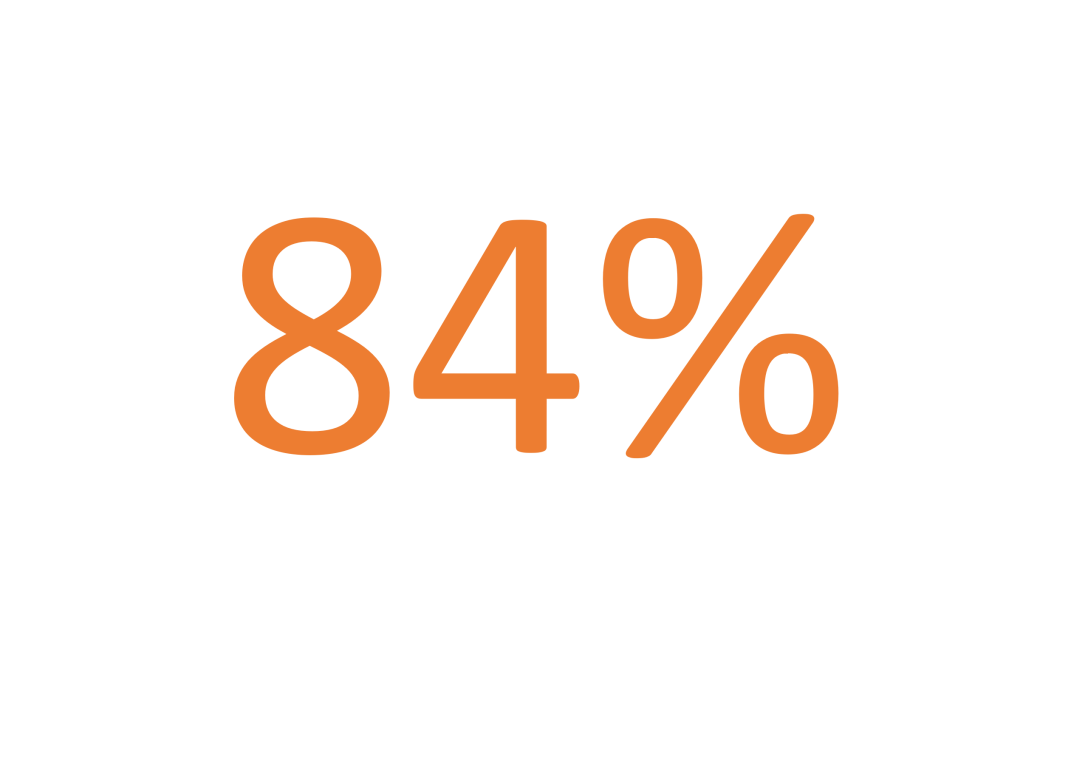
Lifetime prevalence of low back pain (LBP) is reportedly 84% of the general population in developed countries (HAS 2019).
It is estimated that 2 out of 3 individuals in the workforce have had, currently have or will eventually have work-related lower back pain (INRS 2018).
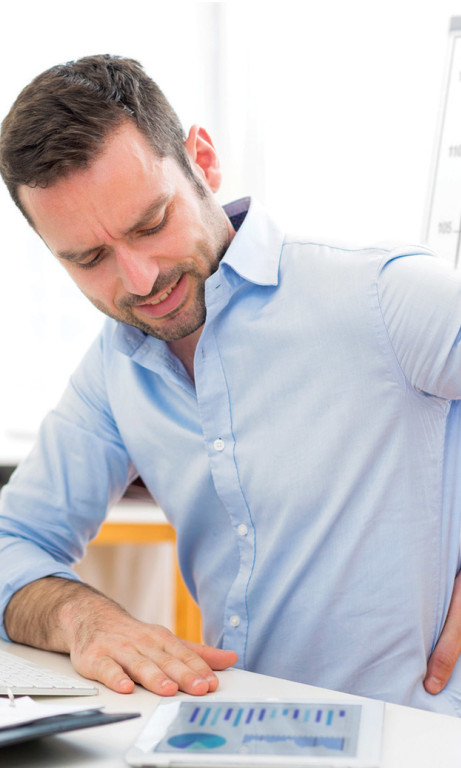
Back pain is a multifactorial problem that may be worsened by static sitting.
In fact, static sitting can cause significant spine issues over time, and can lead to joint and muscular stress, as well as pelvis and leg pain.
Nowadays, many professionals endure prolonged sitting at work, which may lead to decreased productivity, with increased medical visits and sick leave. In this context, it is essential to encourage individuals experiencing back pain to regain mobility and physical activity.
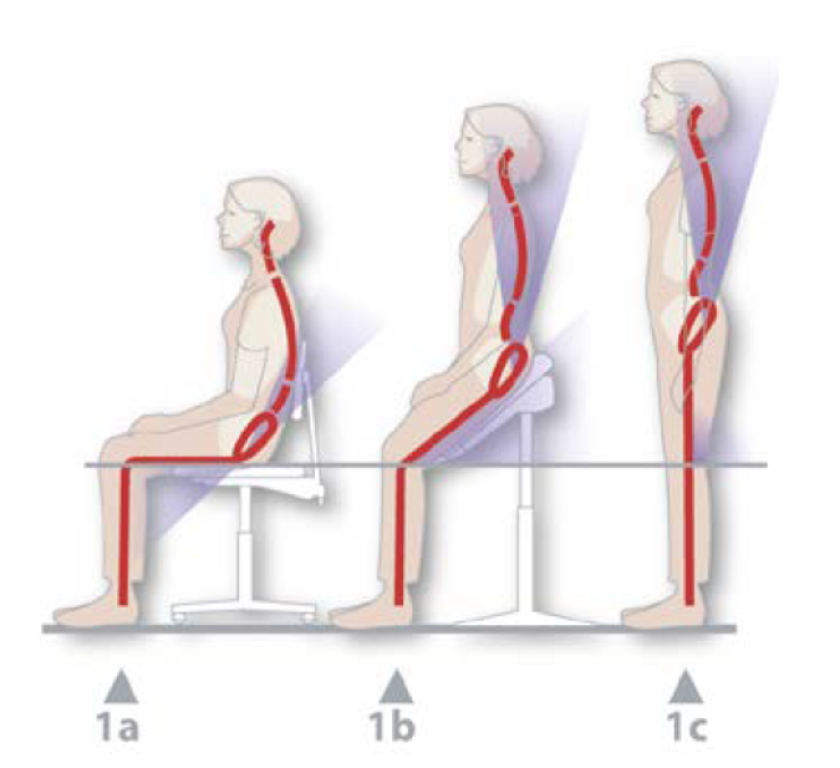
INRS scientists have shown that conventional sitting negatively affects lumbar curvature and back muscles. To avoid this deleterious phenomenon, it is important to adopt an "open" posture that preserves the physiological curvatures of the upright posture.
1a: Sitting results in a rotational movement of the pelvis backwards, which in turn leads to a reduction in lumbar curvature and a "round back"
1b and 1c: the sit-stand and stand postures generate a less significant rotation of the pelvis, naturally preserving physiological lumbar curvature as well as the other curvatures of the spine.
Source: INRS 2020
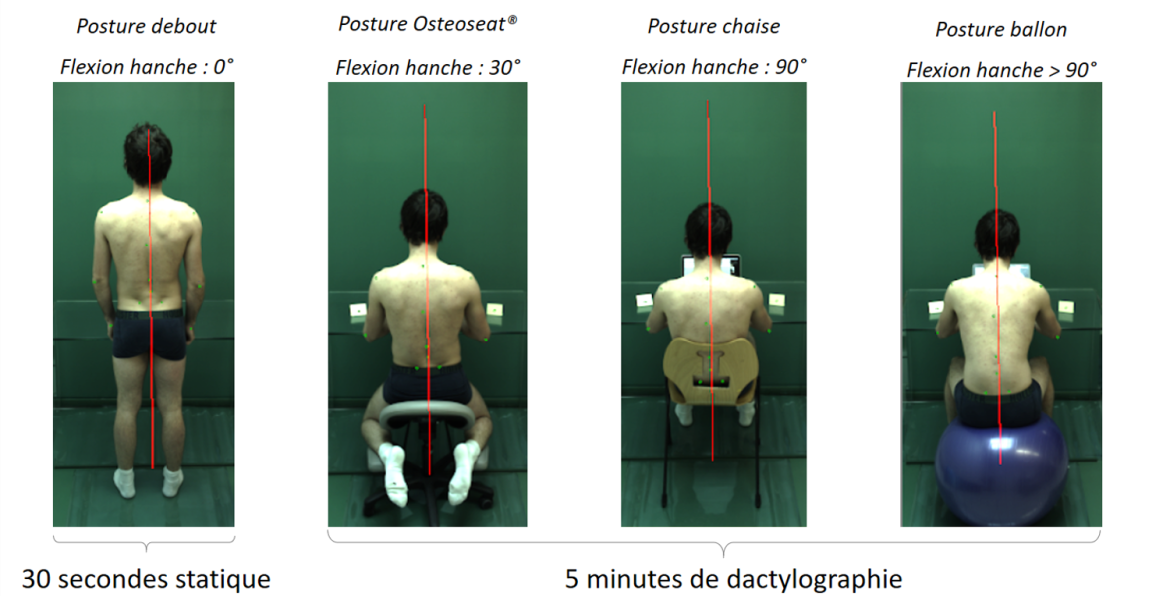
Classic chair, sitting ball or moveoseat?
This study looked at the impact of hip flexion on spine curvature (lordosis and kyphosis). A postural analysis of the spine was performed on three types of seats (classic chair, ball sitting and Moveoseat) and compared with the reference standing position.
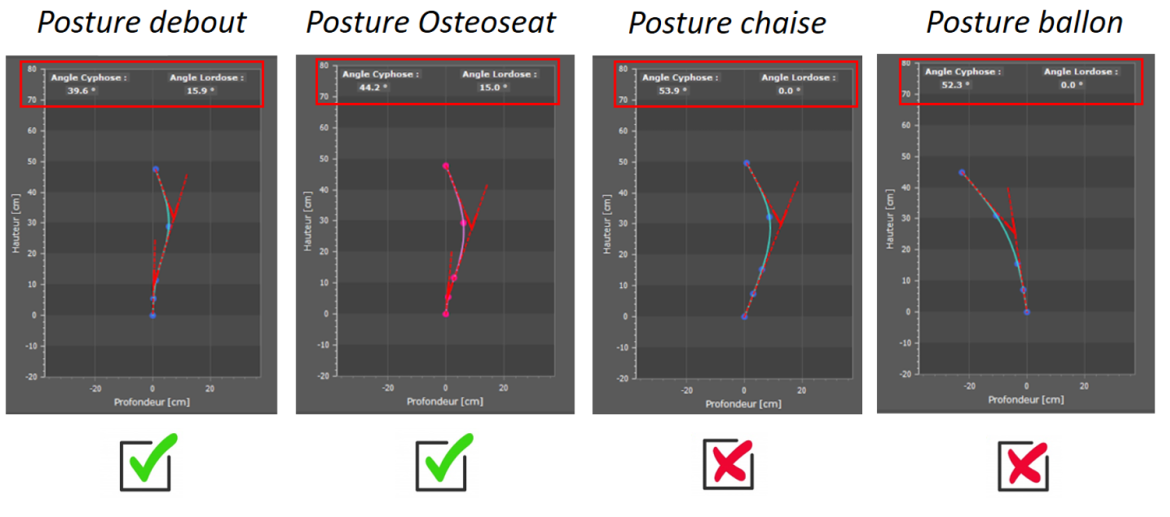
Results
The results showed that a significant hip flexion (classic chair and ball sitting) negatively affected spine curvatures. Conversely, Moveoseat preserves spine curvatures when compared to the standing position.

More than a seat, Moveoseat®️ is a real active ergonomic seat. It helps you instinctively maintain physiological posture throughout the day, thanks to hip-opening and mobility.
Moveoseat®️ promotes gentle mobility of the pelvis and back to prevent contracture caused by prolonged sitting. It reduces muscle tension and visceral compressions, and stimulates good breathing.
Increased mobility strengthens the para-vertebral muscles and the abdominal belt providing greater effortless support.
Moveoseat has been designed based on the 4 essential functions recommended by the French National Authority for Health: Mobility, Reinforcement, Proprioception and Flexibility.

STAY IN MOTION WHILE SITTING
QUALITY MADE IN FRANCE
By joining MOVEOSEAT, you participate in the development of the local French economy. The production is carried out by the association Bretagne Atelier in Rennes (35) which employs people with disabilities. Our upholstery is made by a local company located near the 24h of Le Mans circuit.
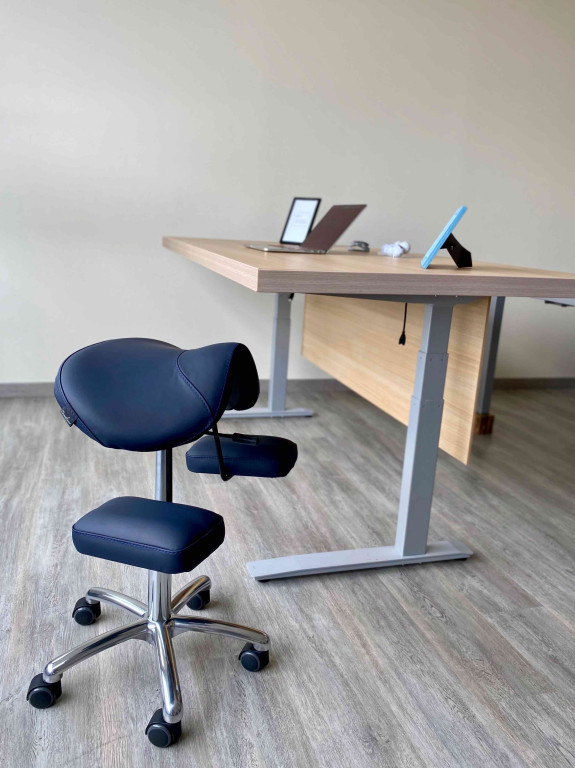

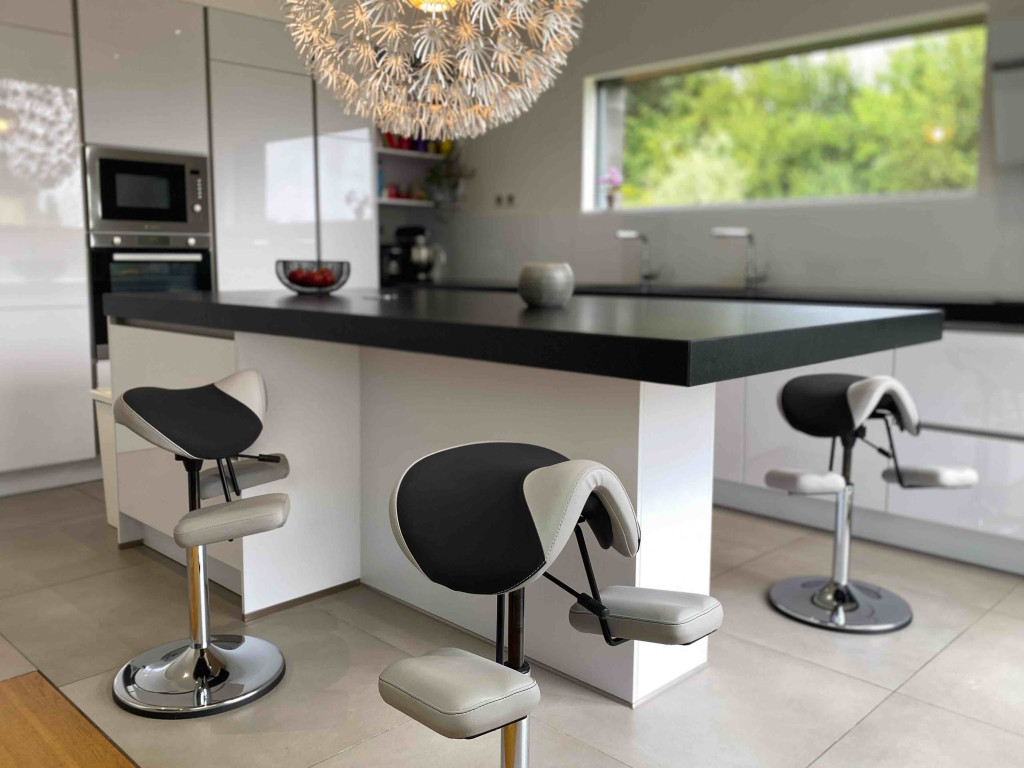






MOVEOSEAT® is a dynamic seating solution that brings movement back into the seated posture. Developed by Satisform® through over 20 years of R&D in biomechanics, it promotes gentle pelvic mobility and spinal motion, and engages the deep stabilizing muscles (multifidus, transverse abdominis, psoas, core). Unlike a traditional ergonomic chair that relies mainly on static adjustments, MOVEOSEAT® encourages continuous micro‑movements similar to the gait pattern, helping reduce disc pressure, ease visceral compression, and counter sedentary behavior at work. Designed and manufactured in France with premium upholstery and density‑optimized foam, it requires no complex maintenance. It is suitable for office work, remote work, and workplace ergonomics programs focused on back pain prevention and posture improvement.
MOVEOSEAT® is designed for office workers, remote workers, employers, HR and workplace wellness managers, ergonomists, occupational health specialists, physical therapists, chiropractors, osteopaths, physicians, and anyone concerned about back pain or prolonged sitting. Its dynamic sitting platform and optional foot‑support positions make it relevant for a wide range of body types and setups (standard desks and sit‑stand workstations). The aim is straightforward: limit the effects of sedentary behavior, support musculoskeletal health, and enhance workplace wellbeing.
Static sitting reduces postural muscle activity, increases intervertebral disc pressure, slows circulation, and promotes joint stiffness and visceral compression. Over time it is associated with low back pain, neck pain, fatigue, and adverse metabolic risk factors. Current public‑health guidance encourages regular posture changes, active breaks, and more dynamic sitting. A dynamic chair that maintains pelvic micro‑movements and proprioceptive input can help offset these effects without constant conscious effort. MOVEOSEAT® is designed to make sitting more active and “alive,” closer to the mechanics of walking, to counter sedentary lifestyles.
A classic ergonomic office chair optimizes posture via static adjustments (backrest, seat, armrests). A dynamic chair adds motion: the seat surface encourages pelvic micro‑movements, activating postural muscles to maintain gentle tonic engagement. MOVEOSEAT® blends ergonomic seating with active sitting: smooth mobility, hip‑opening angles, optional foot‑support positions, and an instinctive path toward a physiologic posture that may help lower disc pressure and muscular tension. The result can be longer‑lasting comfort, less back strain, easier breathing, and steadier focus.
The seat is engineered to guide a natural, figure‑eight (lemniscate) pelvic motion that resembles the lower‑body rhythm of walking. This encourages controlled pelvic tilting, axial elongation, and reflex activation of deep stabilizers (multifidus and core). Users often report progressive muscle relaxation, fewer localized contractures, and spinal curves (lordosis/kyphosis) that stay closer to the neutral upright reference compared with conventional sitting. Enhanced proprioception and balance contribute to back pain prevention and reduced discomfort from static postures.
MOVEOSEAT® is designed for simplicity-no complex fine‑tuning. Match seat height to your workstation so shoulders stay relaxed, elbows near 90°, and the top of the monitor at or just below eye level. Alternate feet on the floor and the foot‑support to vary hip angles and maintain pelvic mobility. A few trials are usually enough to find a comfortable, sustainable dynamic sitting posture.
MOVEOSEAT® may assist both prevention and day‑to‑day management of low back pain by reducing static sitting, supporting pelvic mobility, and re‑engaging deep stabilizing muscles—key levers commonly advised in office ergonomics. Dynamic sitting can help limit contractures and preserve natural spinal curves. For acute or chronic low back pain, consult your physician or rehabilitation professional to personalize use within your care plan.
By sustaining pelvic mobility, MOVEOSEAT® helps maintain physiologic lumbar lordosis, reduces collapse into thoracic kyphosis, and promotes axial elongation and head‑shoulder‑pelvis alignment. Reflex activity of paraspinals and the core contributes to stable support without constant effort. Alternating foot positions reduces pressure hotspots, redistributes load, and delays postural fatigue. Day to day this can translate to steadier sitting posture, reduced neck and back stiffness, and more comfortable office ergonomics.
Reducing abdominal compression and encouraging upright alignment can free the rib cage and diaphragm. Many users experience a more open chest position, less constrained breathing, and steadier energy levels. This posture–respiration synergy can also ease digestive pressure—an often overlooked factor in office comfort and sustained concentration.
For many desk‑bound tasks, yes. MOVEOSEAT® adds the missing ingredient—movement—to standard ergonomic seating. It complements ergonomic principles by making sitting dynamic. In situations requiring highly enveloping support due to specific conditions, a conventional ergonomic chair may remain appropriate. For most sedentary office roles, MOVEOSEAT® can enhance comfort, posture, breathing, and alertness with minimal complexity.
Comfortable, stable breathing and delayed postural fatigue can support sustained attention. Gentle micro‑movements maintain light neuromuscular activation and proprioceptive input, which many users associate with steadier focus over long computer sessions. For best results, pair MOVEOSEAT® with task batching, brief movement breaks, and adequate lighting.
Yes. The seat promotes subtle, self‑regulated micro‑motions, not large swaying. This supports a stable postural base and lighter hand contact on the mouse and keyboard, often reducing upper‑trap and forearm tension. For highly fine work, you can favor feet‑on‑floor phases for extra stillness, and switch to foot‑support phases for recovery—without losing the benefits of active sitting.
MSDs are multifactorial (static postures, repetitive loads, mechanical constraints, work organization). MOVEOSEAT® targets the immobility factor by restoring natural pelvic mobility, engaging deep stabilizing muscles, and reducing sustained compression. It enhances proprioception, balance, and load distribution—key elements for mitigating low back, dorsal, and neck discomfort. Embedded in a workplace ergonomics or wellness program (training, active breaks, workstation setup), MOVEOSEAT® becomes a practical lever for MSD risk reduction.
Satisform® highlights postural analyses comparing a standard chair, an exercise ball, and their dynamic seating approach (formerly OSTEOSEAT®, now MOVEOSEAT®). Findings indicate that excessive hip flexion (typical on standard chairs or balls) is linked with altered spinal curves, while the dynamic seat better preserves curves closer to upright standing. More broadly, ergonomics literature supports strategies that reduce sedentary behavior and maintain postural tone. As with any intervention, outcomes vary among individuals and work contexts.
Yes. Remote work often increases total daily sitting time, sometimes on suboptimal setups. MOVEOSEAT® helps compensate by sustaining pelvic mobility, breathing freedom, and postural tone. Combine it with a properly placed external monitor, separate keyboard/mouse, and short, regular movement breaks to create a healthier remote workstation.
Yes. The micro‑movements are subtle, with minimal visible upper‑body motion when your screen is positioned correctly. Users often report a steadier voice and better vocal endurance on long calls, likely due to less constrained breathing.
MOVEOSEAT® offers a visible, actionable component in workplace ergonomics and wellness strategies targeting sedentary behavior and back discomfort in desk‑based teams. When integrated into a structured program, it may help reduce discomfort, minor absences linked to back pain, and postural fatigue while supporting attention and user satisfaction. French manufacturing, durability, and repairability align with CSR goals. Consider deployment at long‑duration desk roles, focus areas, learning spaces, and recovery corners, with HSE/HR and ergonomist involvement.
Identify target groups (high screen time, reported musculoskeletal symptoms).
Provide concise training on workstation setup and active sitting use.
Track simple indicators (pain VAS, comfort ratings, perceived focus).
Adjust seat allocation, complement with sit‑stand stations, and schedule brief active breaks. This iterative approach supports adoption, comfort, and long‑term MSD prevention.
Yes—build up progressively. Start with 45–90‑minute sessions, alternate with standing or walking breaks, then increase as comfortable. The goal is active sitting that doesn’t feel effortful: micro‑movements maintain tonic support, delay fatigue, and ease breathing. If pain flares, reduce duration and seek advice from your healthcare professional.
In many cases, yes—subject to medical guidance when needed. Gentle pelvic mobility, proprioceptive stimulation, and upright alignment can support comfort and balance. Some users may also value the proprioceptive benefits related to fall‑risk awareness. Begin gradually, prioritize a stable workstation, and transition postures slowly for safety.
Yes. Athletes often appreciate how dynamic sitting maintains deep core engagement, frees breathing, and reduces stiffness after training. By supporting pelvic mobility and healthier sitting posture, MOVEOSEAT® can complement programs focused on posture–breath–mobility during extended computer work.
An exercise ball may encourage some movement but lacks precise guidance and stable support for precision tasks. Postural analyses indicate greater hip flexion on balls, which can alter spinal curves. MOVEOSEAT® promotes healthier alignment, offers controlled positions, and is built for professional, long‑term office use without the instability drawbacks.
Where is MOVEOSEAT® manufactured? MOVEOSEAT® is designed and manufactured in France (Le Mans), with careful material selection, hand‑crafted upholstery, and density‑optimized foam for durable comfort. Local production supports traceability, quality, and repairability—attributes valued in workplace health and sustainability initiatives.
Routine care is minimal. Periodic dusting and following use guidelines are generally sufficient. Robust construction and premium materials help minimize maintenance needs—important for enterprise deployments and intensive office use.
MOVEOSEAT® comes with a 2‑year warranty (excluding wear parts), supported by French‑based service. Local manufacturing and repairability facilitate interventions and product longevity—key factors for procurement teams and CSR strategies. Refer to official terms and conditions for precise coverage.
Policies may vary by purchase channel (Satisform® website or authorized distributors). For B2B projects, a pilot or test fleet can help assess comfort, symptom reports, and focus over time. Contact Satisform® for guided deployment with workplace ergonomics support.
Human spinal and pelvic mechanics are built for alternation and gentle variability. Movement supports fluid exchange, reduces peak disc pressures, triggers reflex activity in deep stabilizers, and maintains proprioception. In sitting, small amplitudes are enough to break harmful immobility. MOVEOSEAT® facilitates these subtle micro‑movements, bringing seated posture closer to the economy and endurance of walking.
Pelvic mobility refers to controlled anterior–posterior tilting with subtle figure‑eight motions coordinated with the spine. Deep stabilizing muscles (multifidus, transverse abdominis, pelvic floor, psoas) provide fine postural control and quality of load transfer. Gentle, ongoing activation can lower fatigue, improve balance, and support MSD prevention. MOVEOSEAT® is designed to stimulate this reflexive activity in the background.
MOVEOSEAT® is available via Satisform®’s official channels and online store. For organizations, direct contact enables discussion of volumes, lead times, finishes, conditions, and workplace ergonomics support. Healthcare professionals can request clinical integration information for clinics and corporate health programs.
Lead times depend on configuration and quantity. French manufacturing enables high‑quality finishes (hand‑crafted upholstery, density‑optimized foam) and options suitable for professional environments. For fleet deployments, colorways, space planning, and logistics can be coordinated with the Satisform® team.