

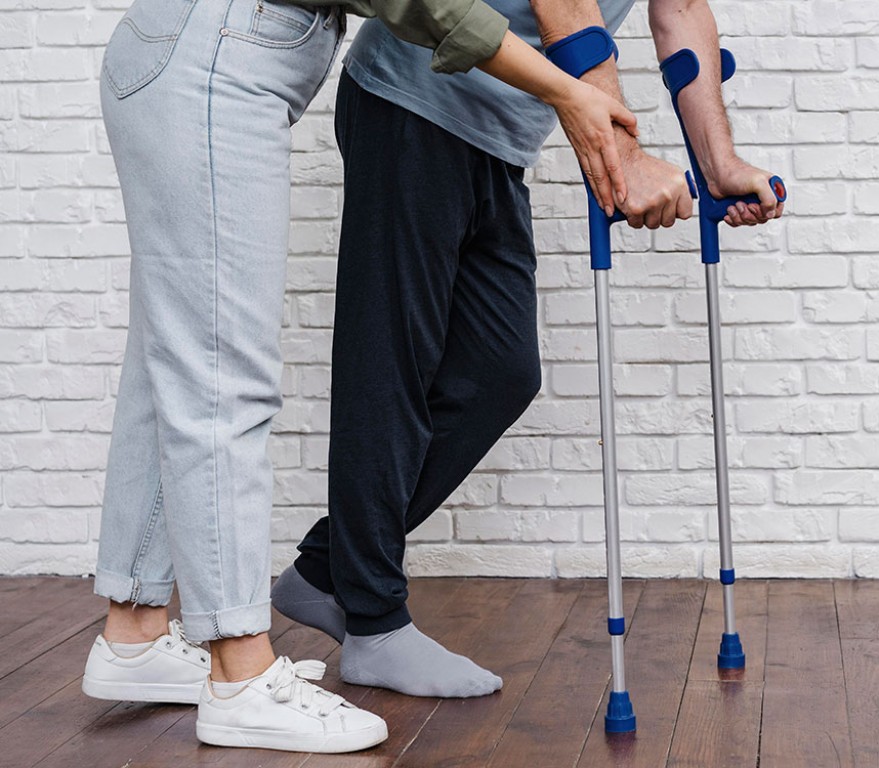
Disability is a generic term that designates a substantial, lasting and stable alteration of a physical, cognitive, psychological or sensory function, resulting in a limitation of activity and a restriction of the possibilities of interaction with one's environment. It is manifested by difficulties in school, work, or social life or by dependence on others or on technical assistance.
In France, the concept of disability was first formulated in the 1975 law, which was the first to define a legal framework for disability and the protection of disabled people. Since then, disability has been recognized in France as a fundamental right to protection and respect of human rights. Abroad, the concept of disability was recognized and defined by the UN Convention on the Rights of Persons with Disabilities in 2006. This convention has been ratified by most countries and has been implemented in many countries to promote the participation of people with disabilities in society. The Convention also addresses the protection of the rights of persons with disabilities and their accessibility to public and private services.
The recognition of disability is a complex and controversial issue. There are differing views among affected persons, non-governmental organizations and the public on how disability is and should be recognized. According to the United Nations, more than 15% of the world's population lives with a disability. However, for many reasons, people with disabilities often remain excluded from basic rights and opportunities. Although significant progress has been made in recognizing disability, discrimination and inequality persist in many countries. People with disabilities and the organizations that support them are unanimous in saying that the recognition of disability requires a systemic and integrated consideration of the specific needs of those affected. It is also important to stress that the recognition of disability must go beyond access to services and education and include consideration of civil and political rights, fundamental freedoms, equality and non-discrimination.
In France, the 1975 law was the first to define a legal framework for disability and the protection of people with disabilities. Since then, many laws and measures have been put in place to fight against exclusion and discrimination of people with disabilities and to promote their social and professional integration. In Europe, a body of legislation has been adopted to support and protect the rights of people with disabilities. The main legal instruments are the European Social Charter, the European Convention on Human Rights and the UN Convention on the Rights of Persons with Disabilities. The European Convention on Human Rights and the UN Convention on the Rights of Persons with Disabilities are the main legal instruments that protect the rights of people with disabilities. Around the world, initiatives and programs have been set up to promote the inclusion and participation of people with disabilities. For example, the Global Initiative on Disability (GID) is a non-profit organization that works to promote and protect the rights of people with disabilities around the world. Many other initiatives and programs, funded by international bodies such as the UN, the European Union and the Council of Europe, are also in place to promote the inclusion and participation of people with disabilities in society.
In France, there are many organizations that represent and support people with disabilities. The Fédération Nationale des Associations de Personnes Handicapées (Fnaph) is one of the largest French organizations representing people with disabilities. It works to promote and protect the rights of disabled people and to improve their quality of life. It has set up programs and initiatives to help people with disabilities find employment, access education and social services, obtain financial aid and obtain technical aids. Fnaph is also linked to international organizations such as the Council of Europe, the UN and the European Union. It works closely with these organizations to advance the cause of people with disabilities. It also participates in international projects to promote the inclusion and participation of people with disabilities in society.
People with disabilities can benefit from medical, psychological and social follow-up to help improve their quality of life. These services may include medical consultations, psychological counselling, social support services and rehabilitation programs. Rehabilitation is a specific treatment that aims to help a person overcome the effects of a disability and learn new skills. It may include physical intervention services, psychological intervention services, social intervention services and technological intervention services. Rehabilitation can help a person to improve mobility, communication, cognition, motor function and social skills.
A gradual return to mobilization is essential for people with a motor disability. Rehabilitation is a specific treatment that aims to help a person overcome the effects of a disability and learn new skills. Rehabilitation can help a person to improve mobility, communication, cognition, motor function and social skills. The main rehabilitation processes for people with motor disabilities are motor rehabilitation, physical therapy, occupational therapy, physiotherapy, occupational therapy and assistive technology. Motor rehabilitation can help a person to improve their ability to perform voluntary movements. Physical therapy can help reduce pain and swelling and boost strength, flexibility and muscle endurance. Occupational therapy can help a person improve their quality of life by teaching them how to carry out everyday tasks. Physiotherapy can help improve posture, movement and motor coordination. Occupational therapy can help a person regain their independence and ability to perform everyday tasks. Finally, assistive technology can provide technological aids to help a person move around their environment.
For further reading in the Satisform publications: Study on Dynamic Elongation of the Spine ; Read: OSTEOSEAT® becomes MOVEOSEAT®: ; Read: Find a Satisform centre ; About About Satisform: movement and rehabilitation equipment.
Related resources: Explore Scientific committee ; Explore DPA Med®: A Medical Device for Neurological, Orthopedic Rehabilitation and Early Mobilization ; Explore The Multidisciplinary Approach in Rehabilitation Centers ; Learn about Parkinson's Congress 2026: Deciphering the kinetic code.
You may also explore Discover DPA Med® Workshop - An innovative approach to spine and locomotion management ; Further reading: DPA Med for inpatient rehabilitation.